

FOUR YEARS LATER, STILL MAD AS HELL.
The State of Abortion Access in the US.

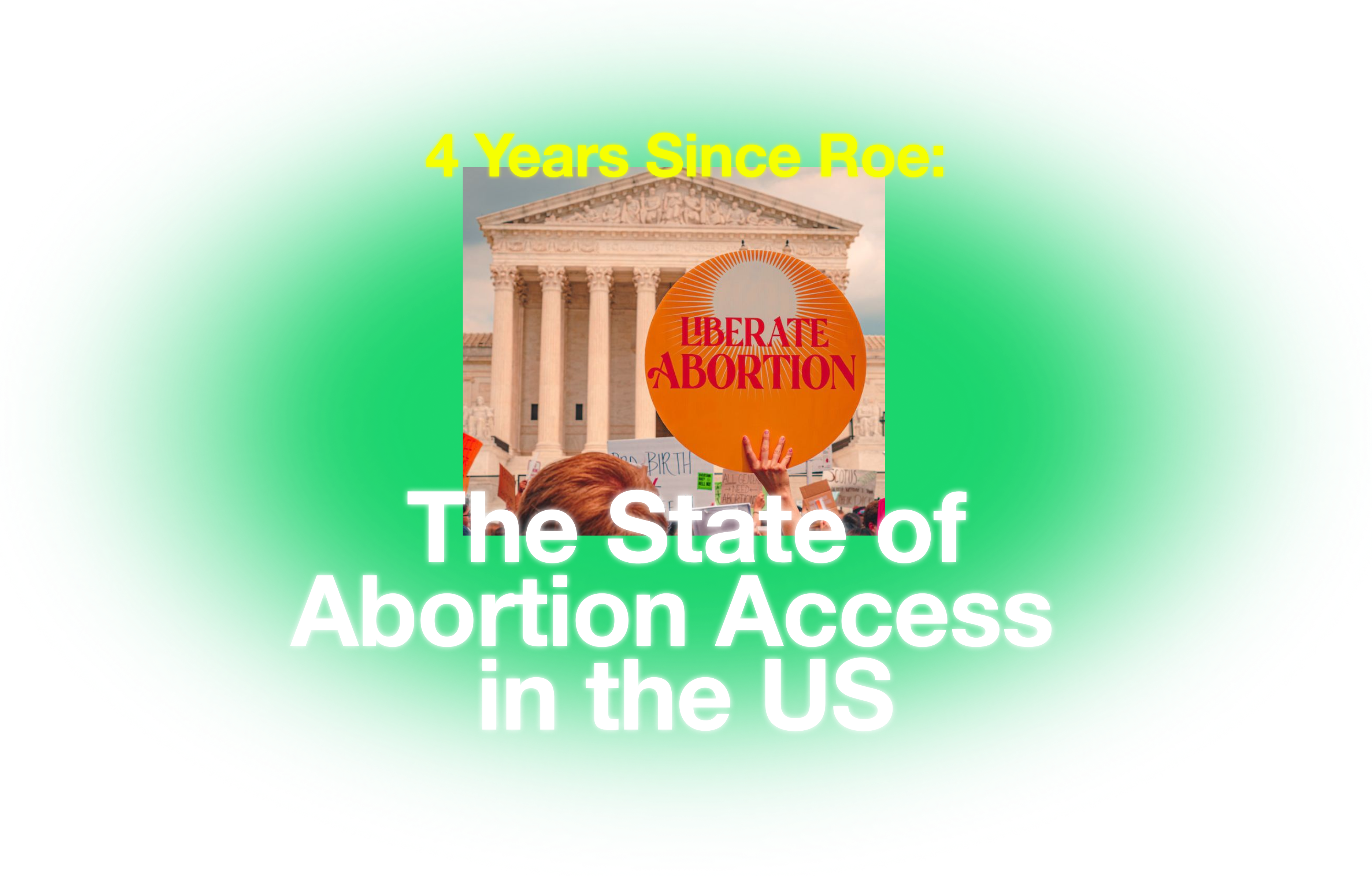
Since the overturning of Roe v. Wade on June 24, 2022, abortion access in the United States has been rapidly reshaped through an expanding wave of state and federal legislative attacks.
Republican-led efforts have moved beyond outright abortion bans into a broader legal strategy of restriction and punishment, including the passage of federal funding and access rollbacks such as the “Big Beautiful Bill,” which further restricts reproductive healthcare access through defunding mechanisms that limit provider capacity and reduce coverage pathways.
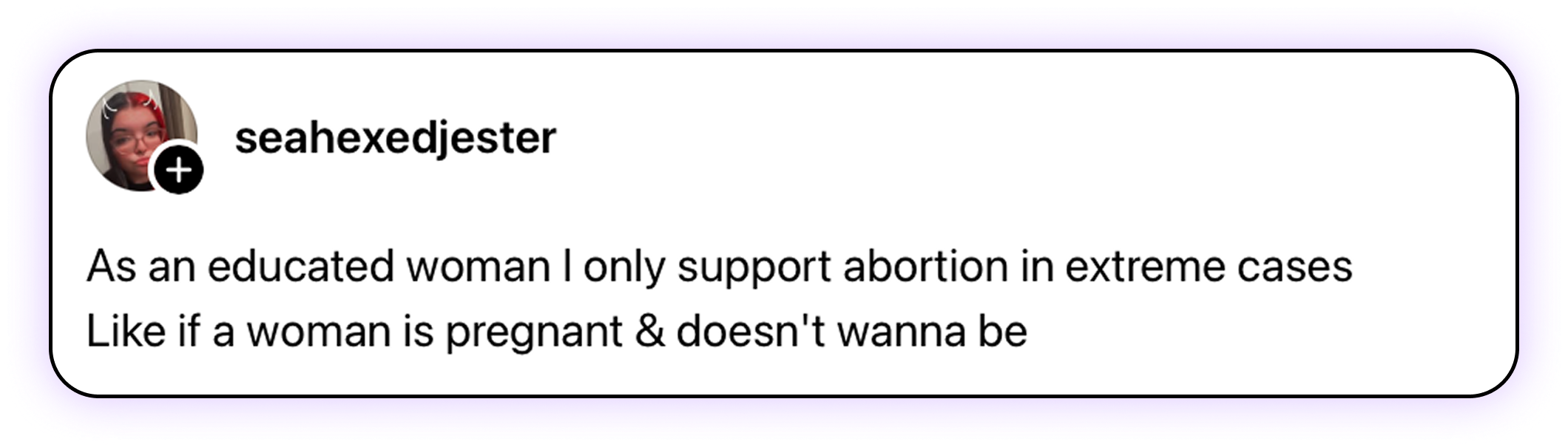
At the state level, this escalation has included legislative proposals and introduced bills that seek to expand criminal liability not only for providers but also for people seeking care – some going as far as to propose the death penalty for people who get abortions.
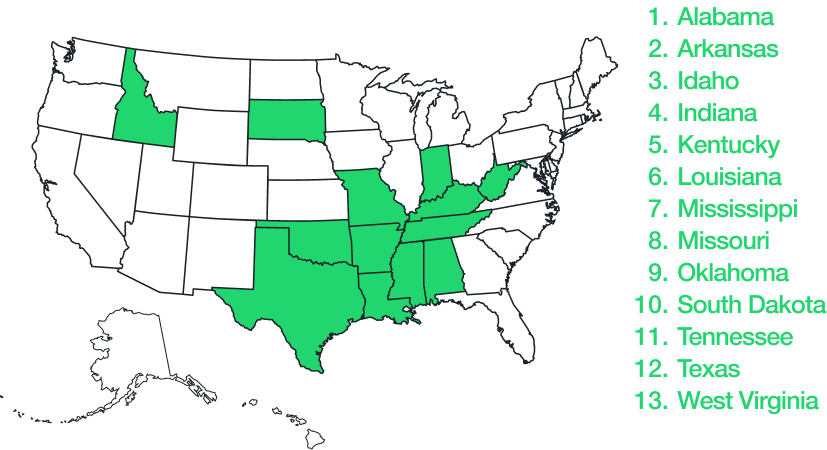
As of June 4, 2026, 13 states have a total ban on abortion
Three Trump-appointed Supreme Court justices (Gorsuch, Kavanaugh, and Barrett) were pivotal in the 2022 Dobbs decision, which eliminated federal protections for abortion rights and enabled this cascade of state-level bans. Four years later, the result is a fragmented national landscape: many states have enacted near-total bans, while others continue to preserve access and expand protections for bodily autonomy.
Florida, Georgia, Iowa, and South Carolina all have abortion bans that limit abortion after 6 weeks of pregnancy, which makes it incredibly difficult to obtain an abortion.
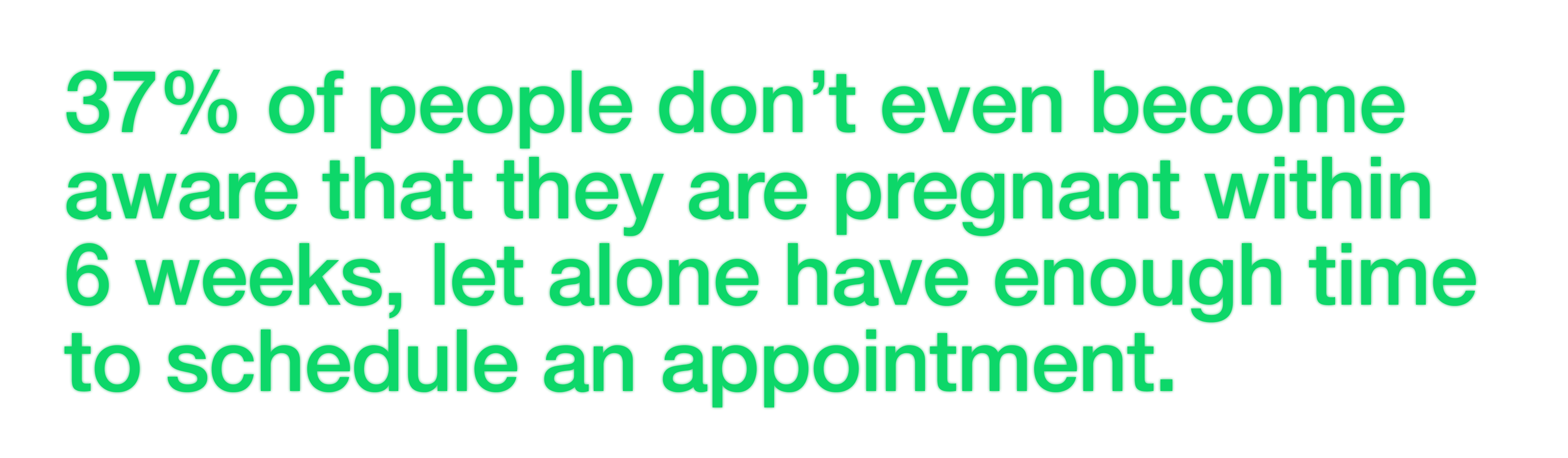
37% of people don’t even become aware that they are pregnant within this timeframe, let alone have enough time to schedule an appointment.
Younger people, bisexual people, and people without private insurance are especially at risk, as these groups have a significantly higher chance of not discovering their pregnancy until on or after the 6-week mark.
💚
The consequences of abortion bans can be measured in lives lost.
By the end of 2023, pregnancy-related deaths had increased by 9.2% in states with total or six-week abortion bans. Take Texas for example:
Maternal mortality rose 56% after the state’s abortion ban took effect.
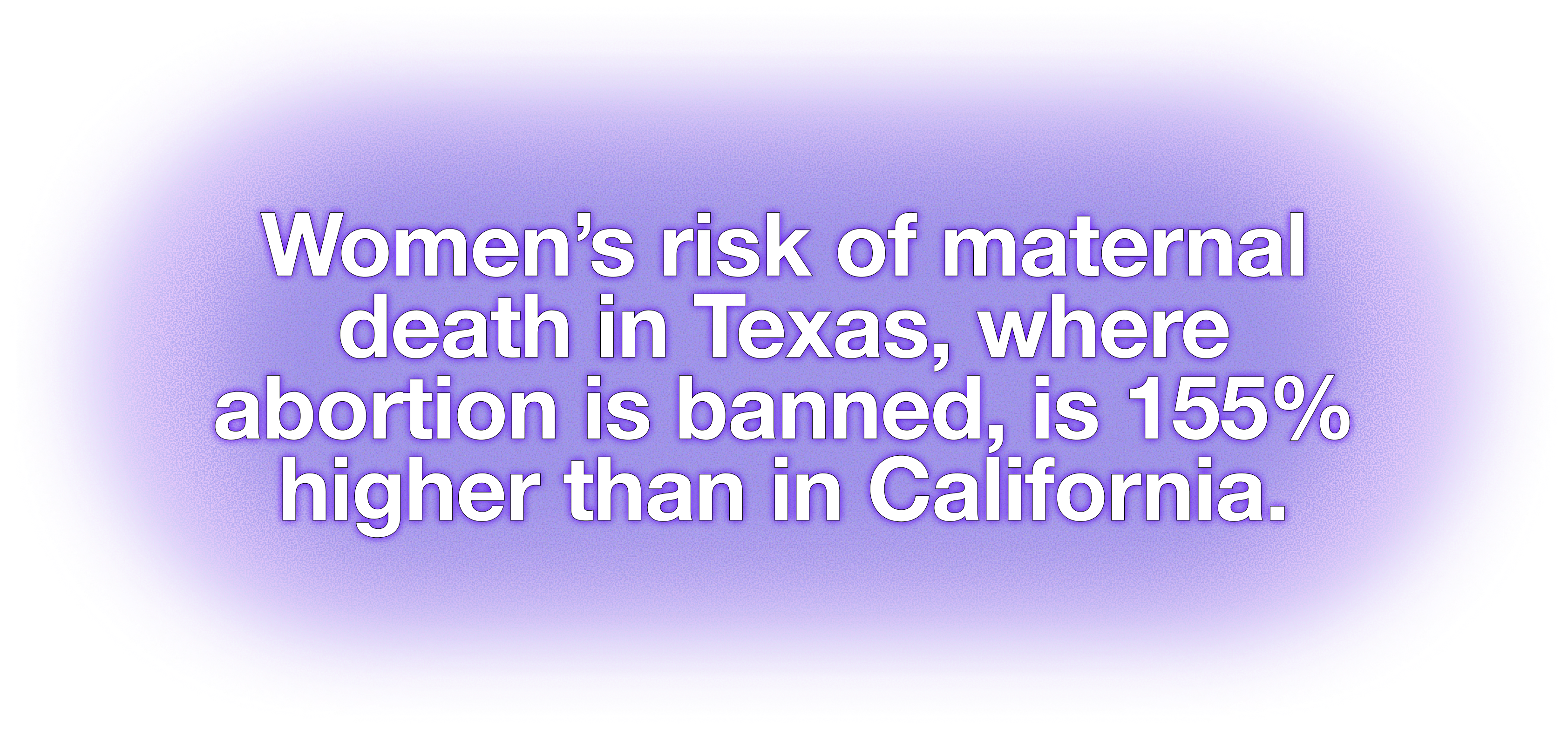
Women’s risk of maternal death in Texas is 155% higher than in California, a similar-sized state where abortion access is protected and reproductive health care is significantly less restricted.
Latina mothers in Texas faced nearly triple the risk of maternal mortality as those in California.
And abortion bans increase the danger Black birthing people already face:
Black women are 234% more at risk of maternal death than white women in U.S. states where abortion was banned.
Access to abortion is not separate from maternal health, it is part of comprehensive reproductive healthcare. The same legislative ecosystem has also targeted medication abortion and telehealth prescribing attempting to close off the remaining pathways people rely on when in-clinic care is unavailable.
Anti-abortion groups have increasingly challenged access to abortion pills through lawsuits targeting telemedicine and mail delivery. While the Supreme Court temporarily blocked one such effort in 2026, medication abortion remains legal and available across the United States despite continued attacks.
If you need access to abortion medication learn more about you options at ineedana.com
💚
A tested blueprint for extending state control.
Abortion access remains an intersectional issue:
Immigrants, BIPOC communities, low-income communities, rural communities, and individuals with disabilities face greater barriers to accessing healthcare.
Undocumented immigrants face increased risk of criminalization when accessing healthcare.
Climate change makes abortion care more difficult to access, as climate disasters lead to increased sexual violence while damaging healthcare systems.
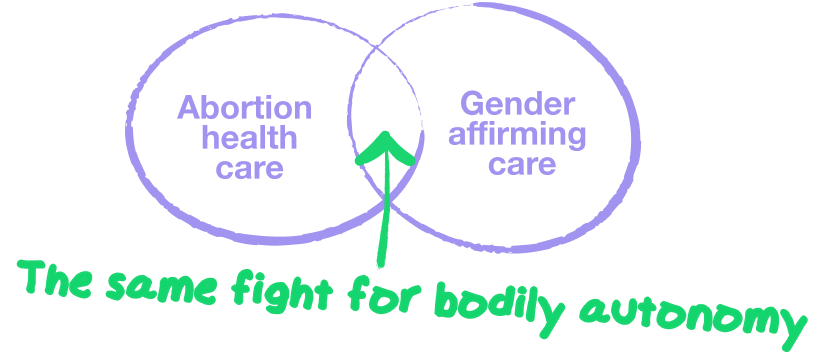
Restrictions on abortion and restrictions on gender-affirming care are being built using the same legislative architecture: broad criminalization frameworks, medical licensing threats, redefining established medical care as politically suspect, restricting telehealth and out-of-state access, and expanding state surveillance over private medical decisions.
This approach is designed to create legal uncertainty that discourages care provision altogether.
💚
The fight for abortion access doesn’t end with the law.
Across the country, abortion funds and support networks help people pay for procedures, transportation, lodging, childcare, and other costs associated with accessing care. But as restrictions increase, many of these organizations are facing a funding crisis.
As donor attention shifts toward upcoming elections and long-term political campaigns, many abortion funds are being forced to reduce services, cut budgets, limit operating hours, or serve fewer people. Without sustained investment, the already fragile network helping people access abortion care may not be able to meet growing demand.
Make a donation to an abortion fund to help keep access available. Find one near you: abortionfunds.org/find-a-fund
💚
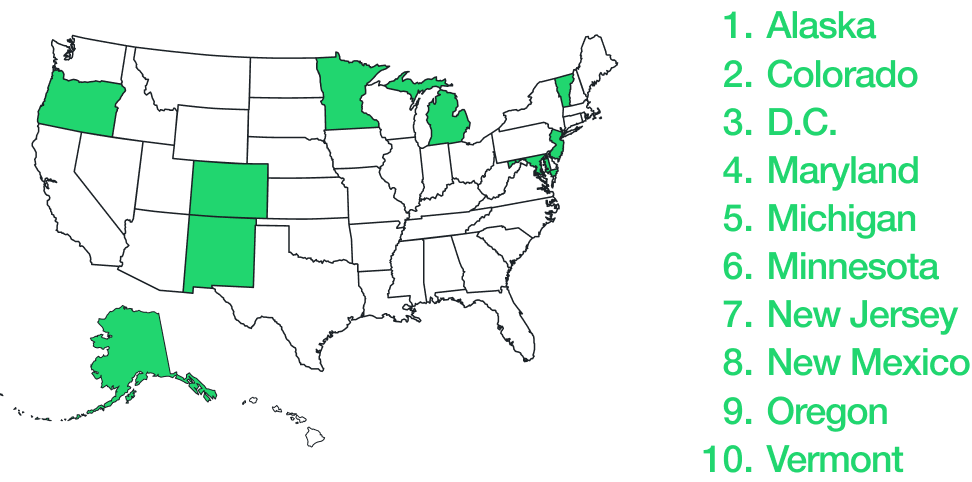
Despite the massive rollback of abortion rights following the 2022 Dobbs decision, these 9 states and D.C. are still upholding abortion rights with no bans or gestational limits:
Abortion access is important because…
💚 Abortion is health care.
💚 Abortion can be life-saving.
💚 Abortion bans do not prevent people from having or attempting abortions; they only make abortion less safe and accessible.
💚 Criminalizing abortion can also inadvertently criminalize people who suffer miscarriages.
💚 Gynecologists are moving away from states with abortion bans, which places everyone’s maternal health at risk.
💚 Everyone should have access to safe, affordable health care.
💚 Everyone should have the right to make decisions about their own body.