

He bragged about his “one-way monogamous relationship” in front of his girlfriend. Then shooed her off camera—to clean.
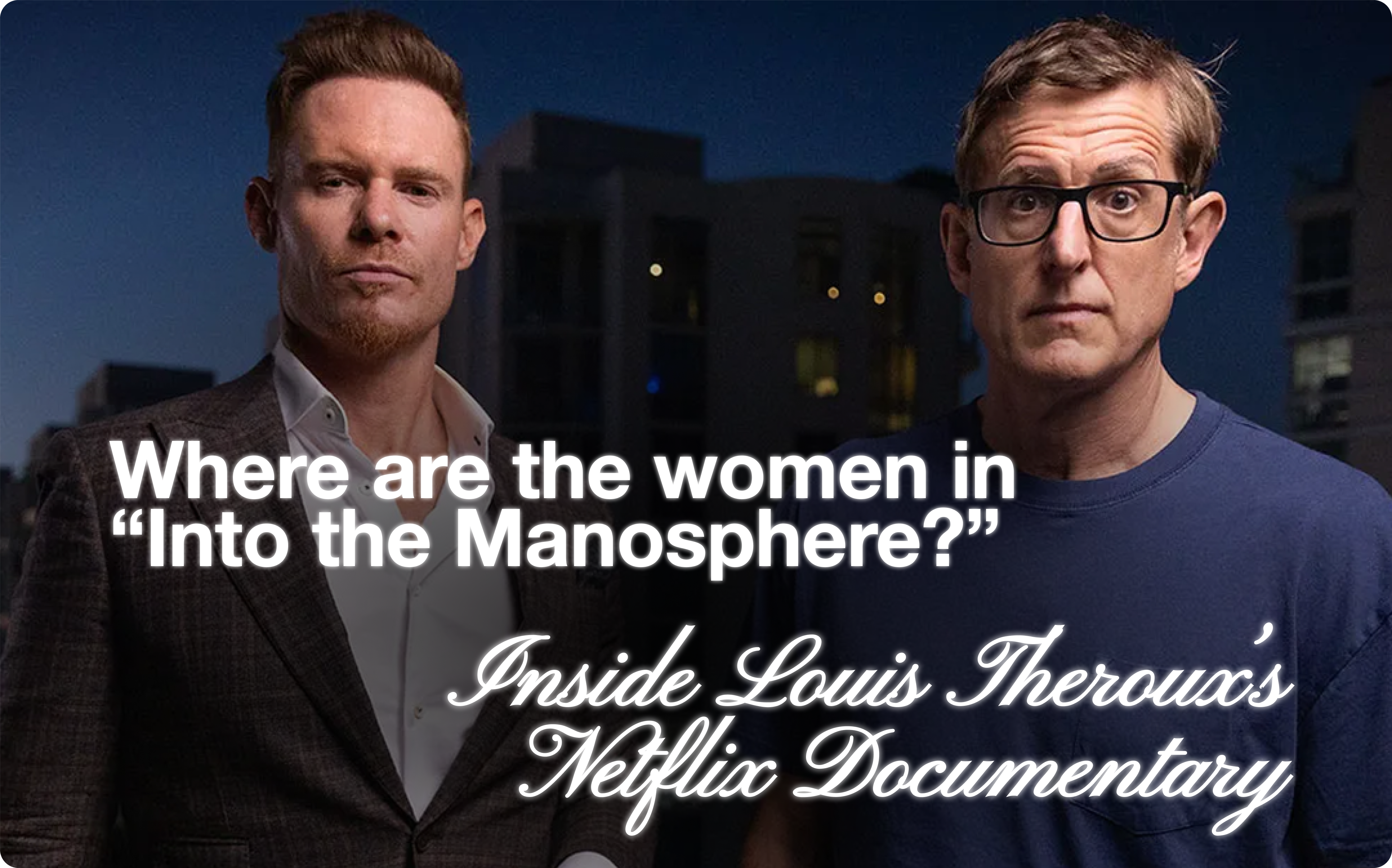
Unfortunately, we have to talk about how Louis Theroux’s new Netflix documentary, “Inside the Manosphere,” failed to bring women inside that conversation.


If you’ve never heard of the “Manosphere,” brace yourself.
Imagine you’re a 15-year-old boy. Your confidence is low. Maybe you’ve never had a girlfriend.
You’re scrolling on social media, and a video pops up telling you it’s not your fault you don’t have what you want. That you weren’t born with value like women were, so you have to create it yourself. That to be of value, you need money, an athletic body, and a stoic mindset. And that if you say yes, you can join a community of other men working towards the same goal.
Enter, the “Manosphere.”
 Tiktok failed to load.
Enable 3rd party cookies or use another browser
What is the “Manosphere”?
The manosphere is a catch-all for a world created by a swarm of male content creators: An online space where alpha males, incels, pick-up artists, and “men going their own way” (MGTOW) promote misogyny, male supremacy and anti-feminist ideologies.
Leading creators of the “Manosphere” (yes, Andrew Tate was one of them) pride themselves on empowering boys and young men, promising them financial success, social clout, and even sex.
Creators use their platforms to monetize their lavish lifestyles by promoting gambling apps, selling business courses, managing women’s Only Fans accounts, and offering “red pill” coaching.
“You take the red pill, you stay in Wonderland”
A little context because no, the “Manosphere” is not new, and yes, it has been seeping into the psyche of boys and young men for over a decade.
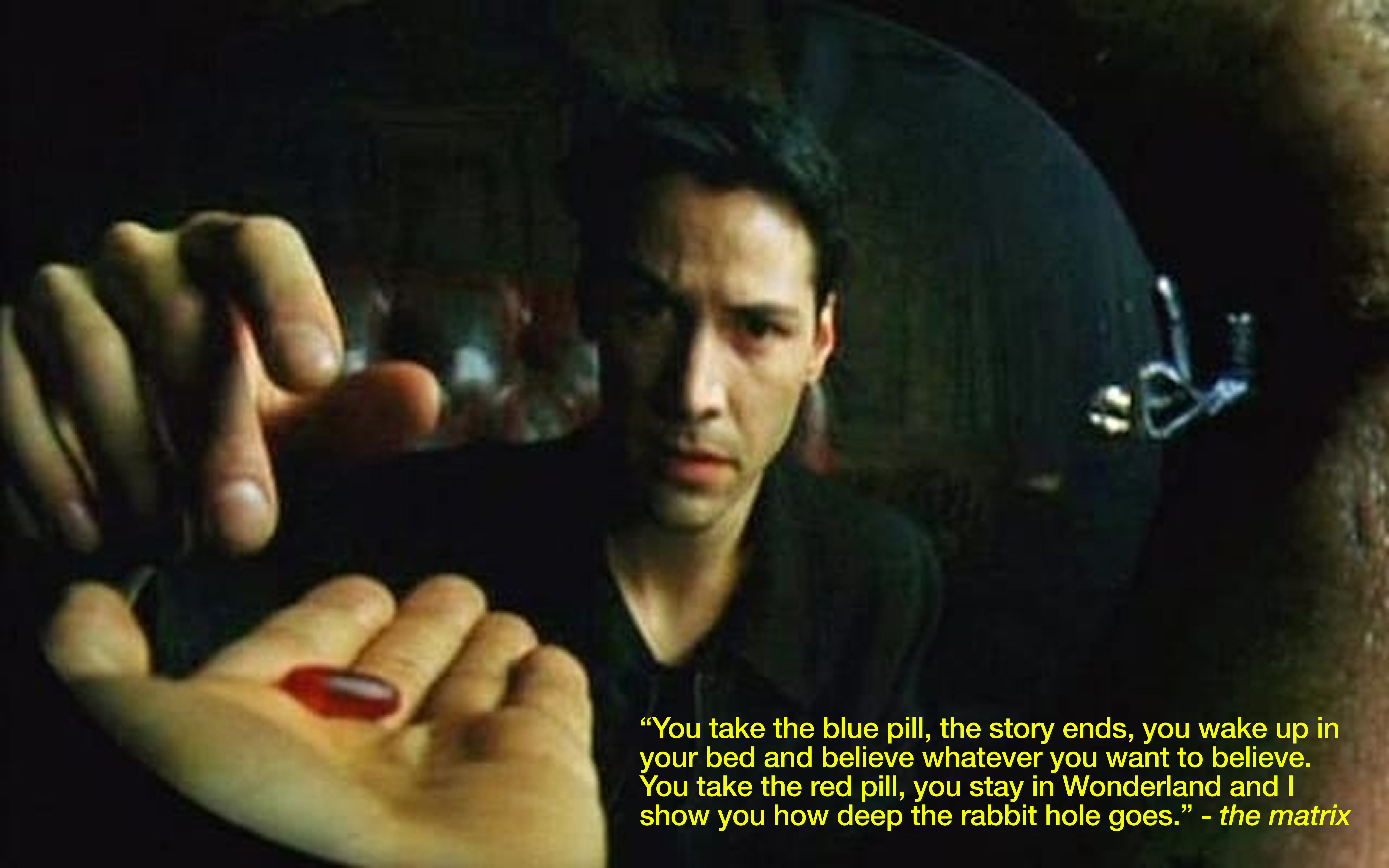
“The Red Pill” concept started in 2012 as a Reddit community for men to voice their disdain for feminism and share strategies for picking up women, often normalizing harassment.
A scene from the 1999 film The Matrix inspired the name, in which Laurence Fishburne offers Keanu Reeves a choice:
If these men haven’t shown up on your feed, kiss your algorithm on the forehead.
“Red-Pill” creators target boys and young men, though their content is widely recognized across all ages and genders.
“I think it can’t be underestimated how young a lot of this audience is. It’s being marketed at kids, and sometimes for them it’s hard not to take it at face value.” - Louis Theroux
The “manosphere” influences boys’ and young men’s perception of self, behavior towards women, and worldview, often shaping them to have anti-feminist, homophobic, or racist beliefs.
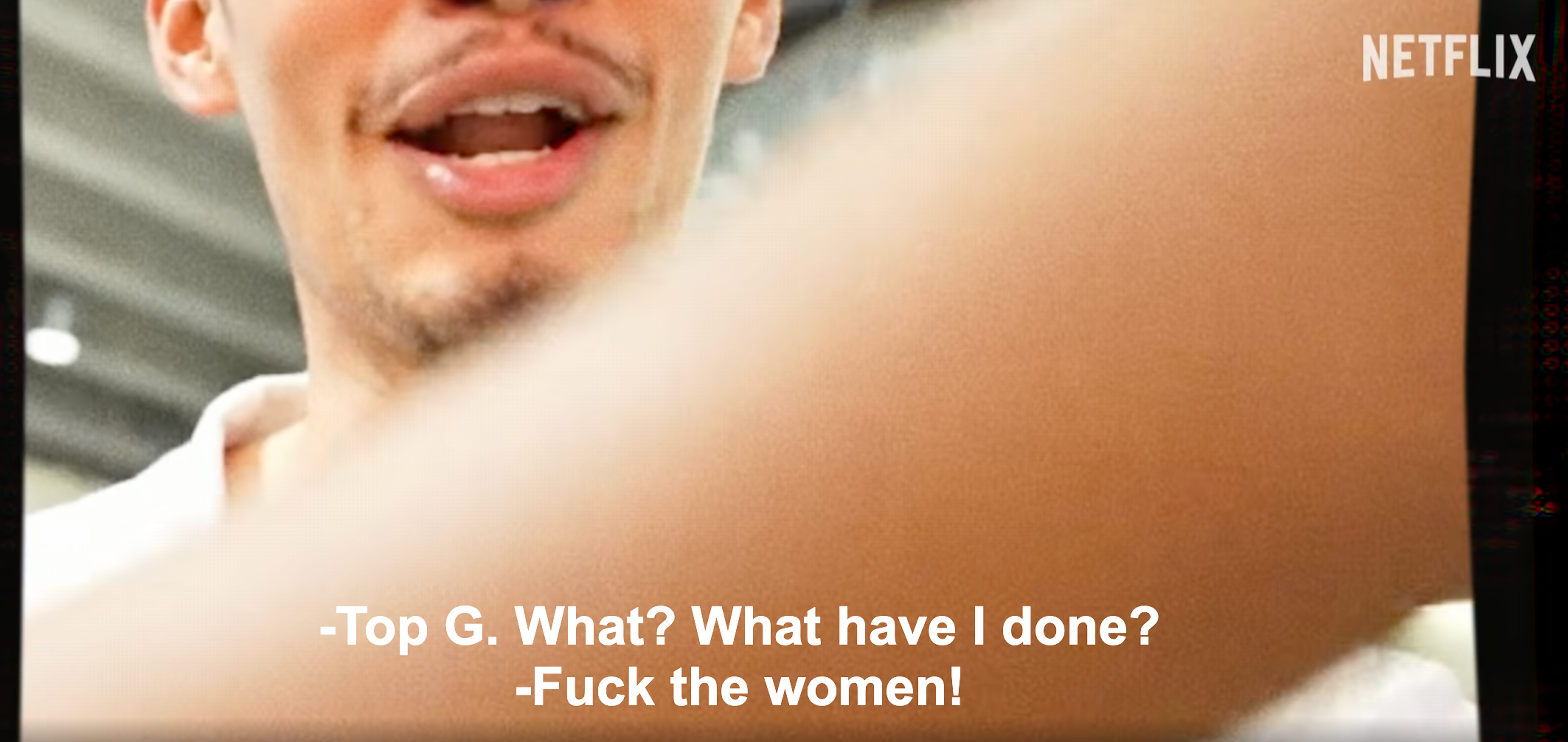
So yes, it is imperative we expose what’s happening inside this world and reveal the real danger of the manosphere’s core messages. It’s vital we educate parents, guardians, and adults who supervise their children’s social media on terms or phrases to look out for. And it’s necessary we protect the people who these men and ideologies directly harm.
We hoped Theroux’s documentary, Inside the Manosphere, would do just that. To our dismay (and many others’), it didn’t.
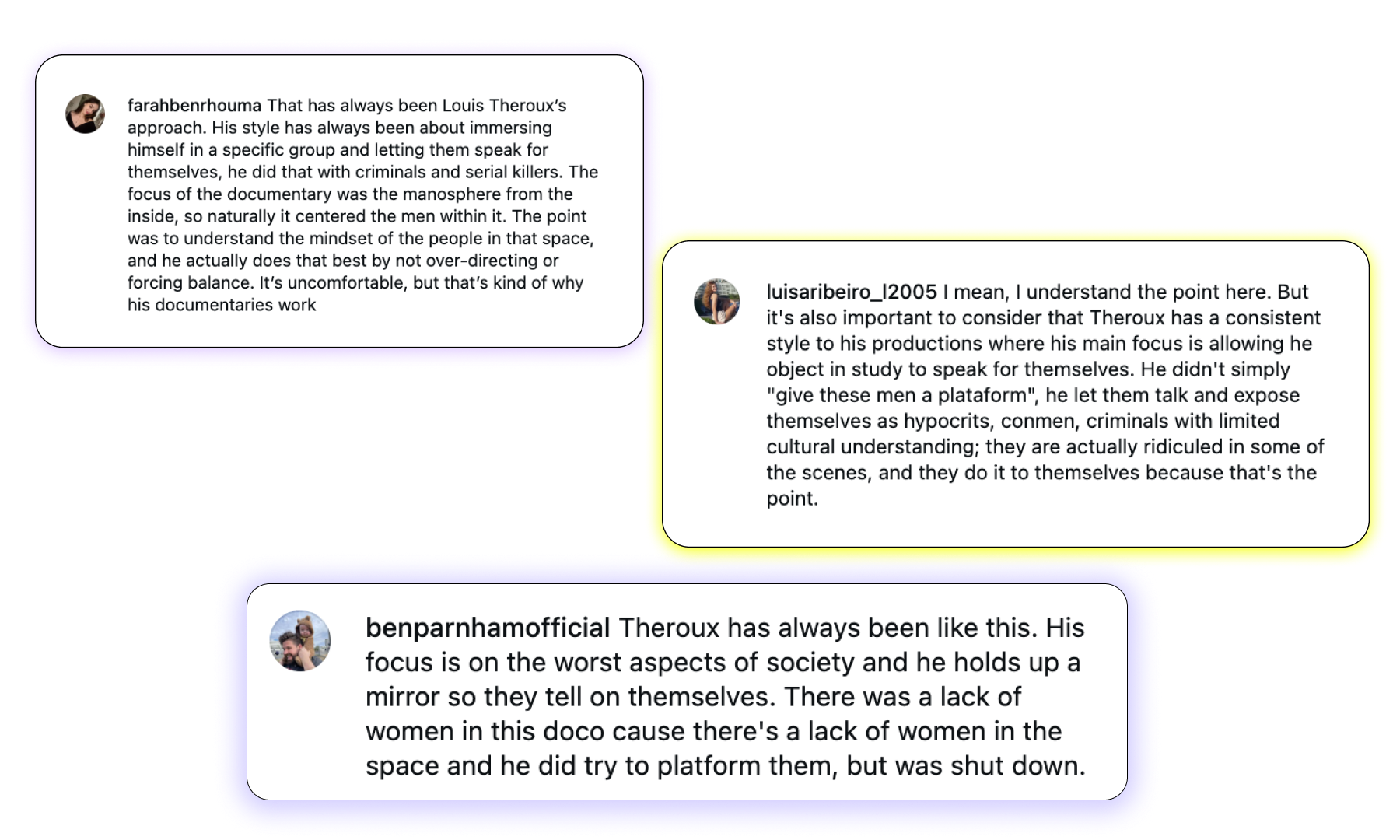
“Inside the Manosphere may have set out to expose this particular sub-culture as one full of beasts and charlatans, all of whom are exploiting a lost generation of men with little in the way of material hope. But didn’t we know that already? Ultimately this is an expensive Netflix documentary that’s provided maximum exposure to individuals who consider any kind of attention a win.”
- Adam White, The Independent
Inside the Manosphere spotlights a whole bunch of men responsible for building a misogynistic universe and approximately zero women outside said universe.
In his documentary, Theroux gives leading “Manosphere” creators (who already have massive social platforms) a mainstream platform. But nowhere in the film does he showcase how the “Manosphere” affects women, girls and gender expansive people.
Most of the women Theroux interviewed were employees, wives, and girlfriends (and one mother) of manosphere creators. And every time he spoke with them, their male, creator counterparts were supervising (and sometimes silencing) them.
Instead of giving women a platform, Theroux’s documentary sidelines them just as “Red-Pill” creators do. And in some cases, he speaks for them.
In an interview with Myron Gaines and his girlfriend, Angie Camacho (who has split from Gaines since the documentary was filmed), Gaines brags that their relationship is “one-way monogamy,” meaning he can sleep with other people, but Camacho can’t.
Moments after Gaines shooes Camacho off camera to clean their room, Theroux insists she seemed unhappy about the one-way misogyny comment. While we agree (the comment was perplexing, and Camacho looked uncomfortable) the fact that two men stayed on camera to make that determination on her behalf while she cleaned Gaines’ room did not do much in the way of advancing a feminist narrative or following her storyline.
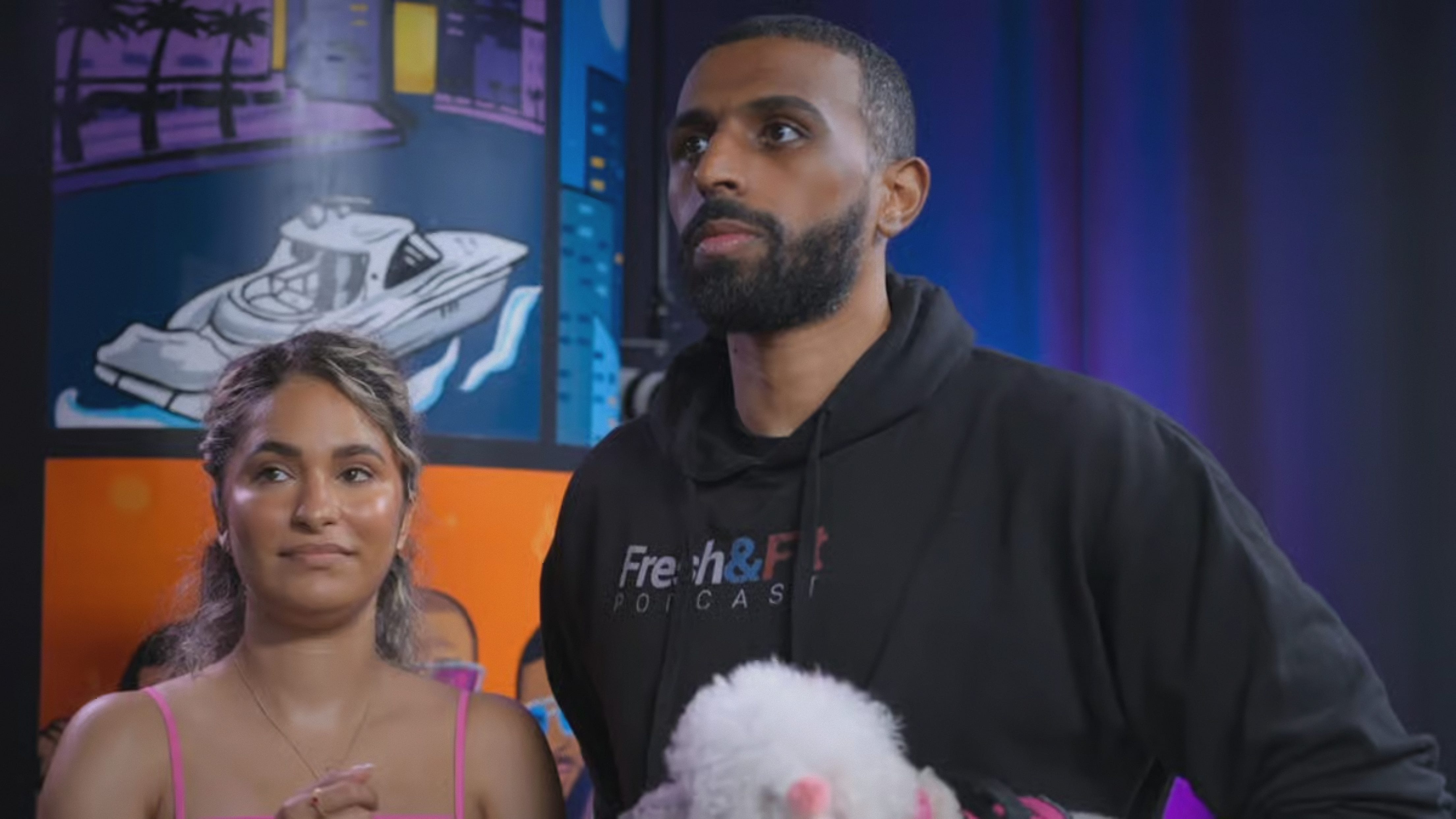
Angie has since spoken out about her involvement in a manosphere documentary—making clear that her participation was never something she meaningfully consented to.
“I never wanted to be part of any documentary whatsoever… I was never told or asked to be in a documentary until the moment of,” she said, explaining that she signed a contract without fully understanding what she was agreeing to.
What followed is harder to ignore. After leaving the relationship and beginning to process the control she had experienced, Camacho says she repeatedly asked producers to remove her from the film. “I did beg the producers… thousands of times to take me out of the documentary, but that didn’t happen.”
Her account raises a deeper question about the ethics of documenting harm in real time—particularly when a woman is emerging from a coercive dynamic. To continue including her, despite those requests, meant reproducing a loss of control she had already endured, this time through the lens of production rather than partnership.
Theroux’s interviews made one thing abundantly clear: the ideologies in the manosphere are harmful. Influencers in the documentary made anti-semetic comments, expressed homophobic viewpoints, and effortlessly glorified a misogynistic, anti-feminist worldview.
But what he failed to incorporate were the people whom those ideologies directly harm.
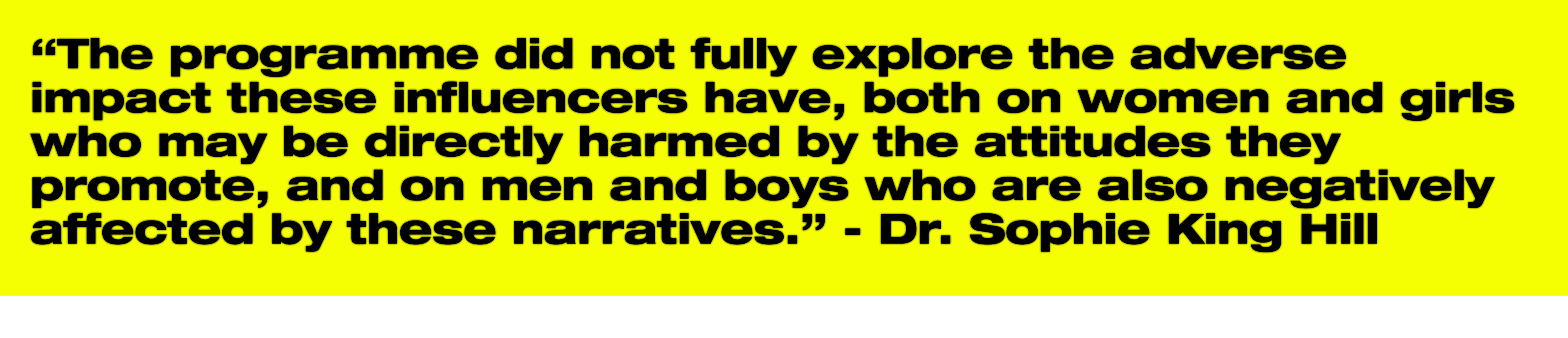
Just last year, reporting for the Guardian, journalist and author of The Pocket Guide to Patriarchy, Maya Oppenheim spoke to four women who had been in relationships with men who had been influenced by the manosphere.
Rachel, a woman in her thirties living in London, met her partner on Hinge, initially drawn to his kindness and generosity. He bought her gifts and gave her money, and she recalls seeing him as a “normal, decent guy.” Within months, that dynamic shifted. During a conversation about the gay community, “he got aggressive… he was super homophobic – I didn’t know until then.” Soon after, he began showing her videos of Andrew Tate, which she believes validated beliefs he already held.
His behaviour grew increasingly controlling—criticising her career, her friendships, and insisting she should rely on him financially. What began as generosity became a mechanism of control. The relationship ended after six months, after escalating violence. He was later convicted of rape and assault.
Some viewers defend Theroux because “this is how he’s always done it”
Theroux remains true to his traditional interview approach in the documentary: disarming, empathetic, and non-judgmental. His style of interview is meant to draw out the truth and let viewers decide how to think or feel about what unfolds.
“I’m just trying to understand them, get my questions answered, and then challenge and push back on the parts that don’t make sense to me or strike me as dangerous.” -Louis Theroux
For many viewers, the lack of women represented in the documentary was a non-issue, with most citing Theroux’s journalistic style as a fair reason.
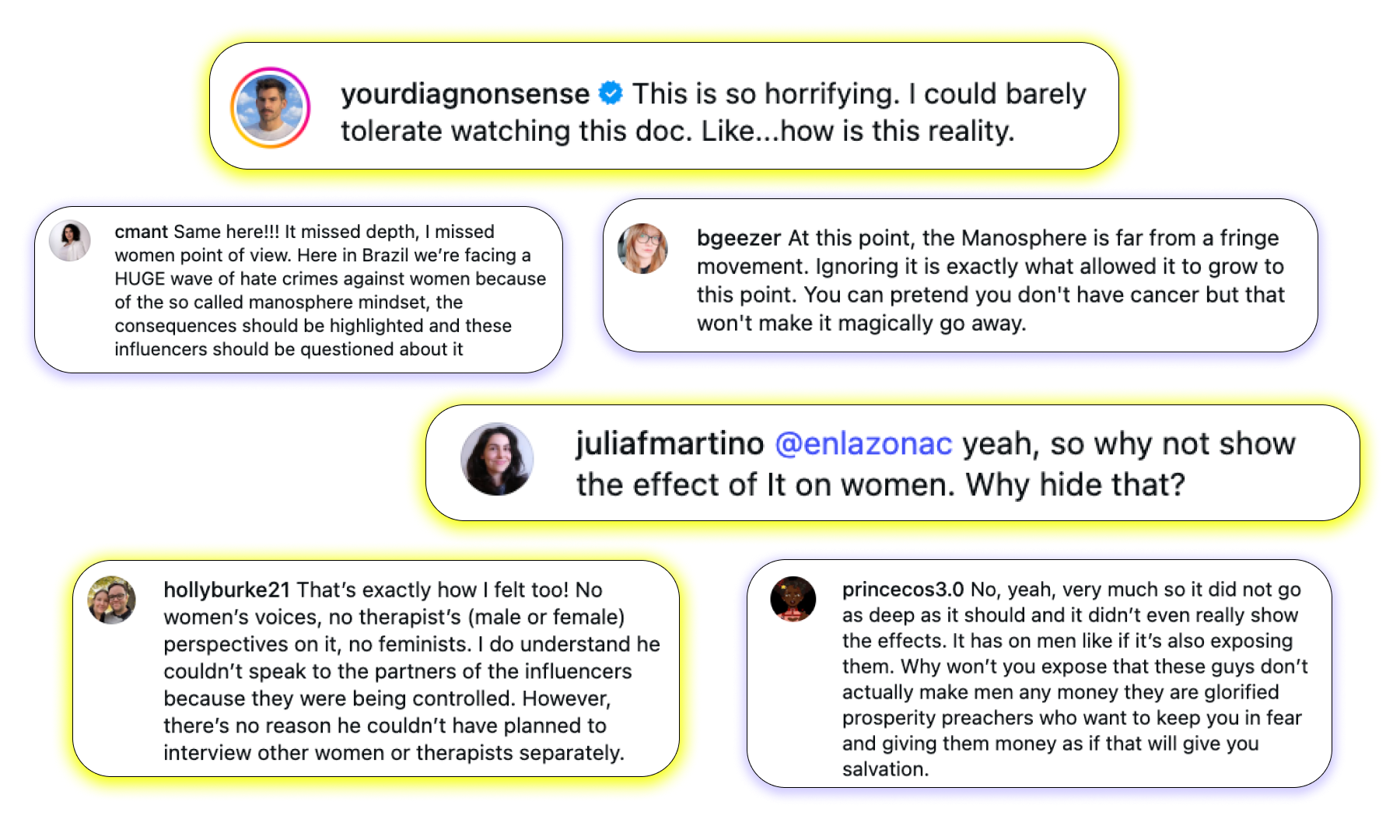
Yes, Theroux’s track record as a journalist doesn’t include holding people to account, and his legacy is rooted in his open-minded, gentle, non-conclusive style.
But suggesting the blatant absence of women and gender expansive people in his documentary is justified because “that’s his style” or “how he’s always done things” sounds a little bit like “boys will be boys.”
If we add “creative autonomy” to the list of acceptable excuses for actions that disempower already marginalized groups, we perpetuate a longstanding narrative that the advancement of gender equality is a waste of effort because “that’s how it’s always been.”
Mainstream coverage fails to bring women inside the conversation of the “manosphere” at large
FEMINIST contributor langa⭐️ reminds us that Theroux and Netflix aren’t the only ones platforming red-pill content:
After the New York Times’s recent profile of internet “Looksmaxxer” Clavicular, it’s clear that establishment media is cashing in on the very same attention economy that the manosphere is taking advantage of.
The documentary’s limited focus on women reflects a broader trend in coverage. From “male loneliness epidemic” narratives to sympathetic red-pill creators, this kind of media centers men as the primary victims of the patriarchy they help sustain, and at times frames feminism as the source of their struggles.
And that amplification comes at a cost, one women often pay most acutely through increased harassment, abuse, and the normalization of misogyny in their everyday lives.
Did you watch “Into the Manosphere?” Tell us what you thought ⤵️
There is value in bringing the manosphere into mainstream conversation and the documentary does a good job in exposing just how lucrative misogyny has become, revealing the scale, strategy, and profit behind these creators. But how we frame it determines whether we challenge it or help sustain it.
Theroux’s final sentiment was, “we are all inside the manosphere.”
Our hope is to get everyone out, and fast.

 | A guest post by
|
Theroux holds no interest for me. I am already keenly aware of the male insecurity issue plaguing us. This macho posturing is nothing new just louder along side the "bimboification" of women held as the preferred role. The obsession over body modification is grotesque. And it has influenced very young girls which is maddening.
I watched half of it. I felt I did not need to see anymore. These men sell a bogus lifestyle to young men. Their "girlfriends" and "wives" are hookers or mail order brides. That's what it looked like to me anyway. None of their fans are likely to find a relationship following this tripe. I agree Theroux is a shit journalist. Staring incredulously is not journalism. You're supposed to ask follow up questions when someone says something ridiculous. You're supposed to challenge people. But that disappeared from tv journalism a long time ago.